
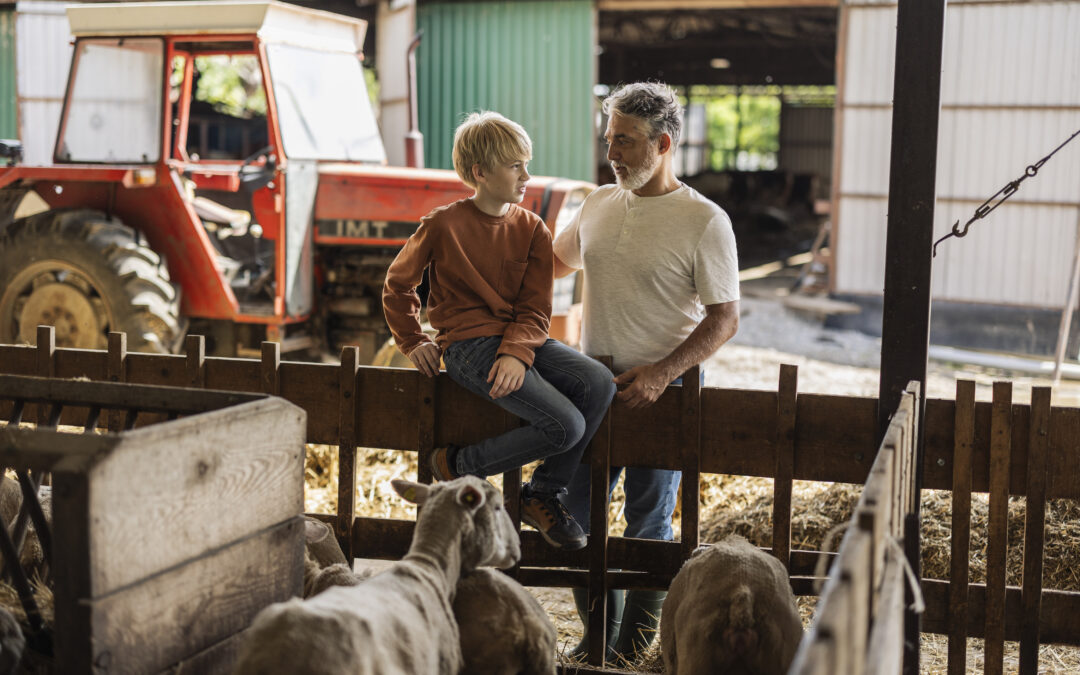
The family unit is profoundly impacted by divorce in any circumstances, but in a farming family this can have added complexities. In simple terms, a family farm is often a business as well as a home, but in addition to this it is usually the case that a farm has received considerable, long-term investment and has been in the family through multiple generations. For this reason, a divorcing couple is making decisions far beyond simply dividing marital assets and making child arrangements, their actions can significantly impact in how other issues, such as land ownership, succession planning and even business viability are managed going forwards.
Every farming business is different, of course, and every family has its own unique circumstances, but there are some general legal guidelines that farming families can follow to help them understand how the law works when divorce becomes an unavoidable way to proceed. Divorce can put a 100-year family farm at risk, but it is important to note that the court will take into account the history of the business when considering all the circumstances of the case.
What makes divorce in a farming family unique?
Most divorcing couples are faced with dividing marital assets which usually consist of property and finances as a minimum, and deciding how income and finance will work in the future. But for farming families, the family home is often located on the farm, which operates as a business and generates the main source of income. The family home could be owned by the farming business itself, as well as the land surrounding it. The business could be a partnership or a limited company. It is also possible that different generations of the same family have investment shares in the business.
Important considerations when a farm is included in a divorce
- A family farm is not automatically divided equally
In any divorce, the court will consider the starting point of an equal division of matrimonial assets, however this is often departed from if required to meet needs, such as an income shortfall or more challenging circumstances for one partner.
The court takes into account factors such as the length of the marriage, any dependent children and the financial needs and earning capacity of each partner. The standard of living during the marriage is also considered.
- How is agricultural land divided?
Land is often the most valuable asset and therefore the courts need to consider who owns it i.e. the divorcing couple of the wider family, when it was bought or inherited by the current owner, how it has been treated during the marriage and how important it is to the business. The impact of any proposed settlement on the business will be carefully looked at. This won’t prevent the value of the land being divided fairly, but the court may seek to offset this value against another asset to protect the business and ensure it can still operate on a commercial basis.
- What if the farm has been inherited?
It is common for farms to have been in a family for multiple generations, and therefore not a standard marital asset, i.e. one which has been accumulated during the marriage. The starting point is to consider inherited assets as non-matrimonial, however this is more complex if it involves the family home and/or other assets that have been treated as assets of the family during the marriage. It is not automatically the case that inherited assets are ringfenced. It will depend on the individual circumstances in each case.
- The business structure of the farm
There are fewer farms operating as sole traders today, and most farming businesses are either a partnership or a limited company. Navigating a divorce where the farming business is a partnership will require an assessment of who the partners are, how the partnership is structured and who owns land and machinery. A partnership agreement can be used to protect the partners in the event of divorce, much like a pre-nuptial agreement would, but the divorce process will require close scrutiny of accounts and structural agreements, nevertheless.
It is also common for farming businesses to be limited companies and for one or both parties to own shares in the business. In this case the courts need to assess the value of the company and therefore the shareholdings of each party. This will impact on the short, medium and long-term income of both parties, and the eventual settlement will also impact on the viability of the business. As before, the courts may seek to protect the future of the business, but company shares are factual valuations which have to be taken into account.
- Succession planning
Farming businesses can be an emotional focus when it comes to divorce. Many years of succession planning can be thrown into turmoil by a divorce, and inevitably there will be concerns about who will own land in the future, how the business will be inherited by future generations, how investments in the farm will be managed and whether the business has a viable future at all. These kinds of discussions combine financial realities with great emotional weight, and hence it is important to get legal clarity at an early stage so that families can avoid significant disruption to their future plans.
- The housing needs of the family
Housing needs are a key factor in any divorce, and in a farming family divorce it is common for both parties to have lived and worked on the farm for many years, and also raised a family there. Everyone may have emotional ties, including children. Courts will consider the housing needs of the parties and any dependent children alongside their unique circumstances. Finding living arrangements that meet all these needs, and remain fair, can be very challenging. If the parties can find solutions outside of the court process, these can often be more suitable to their bespoke needs.
How to resolve disputes in a farming family divorce
Although there is added complexity in a farming family divorce, this doesn’t have to put a farming business at risk, and it doesn’t mean a divorce automatically becomes hostile and full of conflict. It is common for divorcing farming families to reach amicable solutions, often through alternative dispute resolutions such as mediation or collaborative law. These processes allow for more flexibility and pragmatism than you might see in formal court proceedings, and in neutral, confidential environments it is easier for families to find the solutions that acknowledge the importance of generations of farming history.
In addition, pre-nuptial agreements can be a valuable part of a family’s succession planning in respect of a family farming business. The agreement can set out the parties’ respective interests in the business as well as any related assets and what arrangements would be put in place in the event of a divorce.
For example, it could address whether one party would exit the business and, if so, how this would happen and how they would realise their interest. Although pre-nuptial agreements are not automatically legally binding in England and Wales, they can carry significant weight when properly prepared.
There are many elements of the legal spectrum involved in farming family divorces and hence it is important to seek legal advice early and to identify specialist legal expertise who can help with the complex areas of farming family divorce. This proactive approach is the key to resolving disputes amicably and ensuring families have key needs addressed and that a proud and historical family farming business can continue to operate.